Common Buzzard - Baltrasna, Ashbourne

Sunday, May 28, 2017

Great Spotted Woodpecker

In the last eight years or so a bird has been added to the Irish list that most birders living here had hoped for but never really thought would happen.  The bird in question is the Great Spotted Woodpecker.  To date there are regular reports and sightings all along the East coast and much further afield.

The Great Spotted Woodpecker is a bird I first had in Ireland in the Phoenix Park, Dublin in about 2010/11.  I put the hours in (as did many birders) and had various encounters throughout the park over a couple of years until eventually the novelty wore off and you just mark it down as a bird you know you can get if you really put the hours in.

Recently the GSW  has been photographed in Co. Louth, heard I believe but not seen in Co. Meath (open to correction on this one) and down every county on the Eastern side of the country as far as Waterford.  It's been a remarkable success story, a bird that is such an ever present in the UK but until recently had never been confirmed in Ireland.

This GSW was one I located at Newcastle, Co. Wicklow a few months ago.  I had only just opened the car door when I was greeted by the unmistakable drumming of this little beauty.


The moral of this little tale is that there are many birds which are common enough in the UK but have never taken the plunge and traveled the very short distance to us here to breed, heck there are some who haven't even bothered to appear in any way shape or form.  I'm personally hoping that the next one to make the jump is the Tawny Owl, a bird I've only ever seen once and yes that was in the UK.  I think it would make a cracking addition to our very short list of native owls.

Friday, March 10, 2017

Sanderling

The Sanderling is a bird that Winters in Ireland and is found easily enough on coastal sites.  Most of the birds that over Winter here in Ireland are of Siberian origin.  Sanderlings are easily picked out as they busily feed at the waters edge scampering in and out with the flow of the tide never standing still.


Sunday, February 5, 2017

Herring Gull 1st Winter

Lambay Island contains Irelands largest Herring gull colony, as a result Howth harbour just a short hop away is never short of them.  Winter is a great time for gull watching and Howth is a great place to find them.   Here's a 1st Winter Herring Gull from amongst the crowd yesterday morning.


Sunday, January 29, 2017

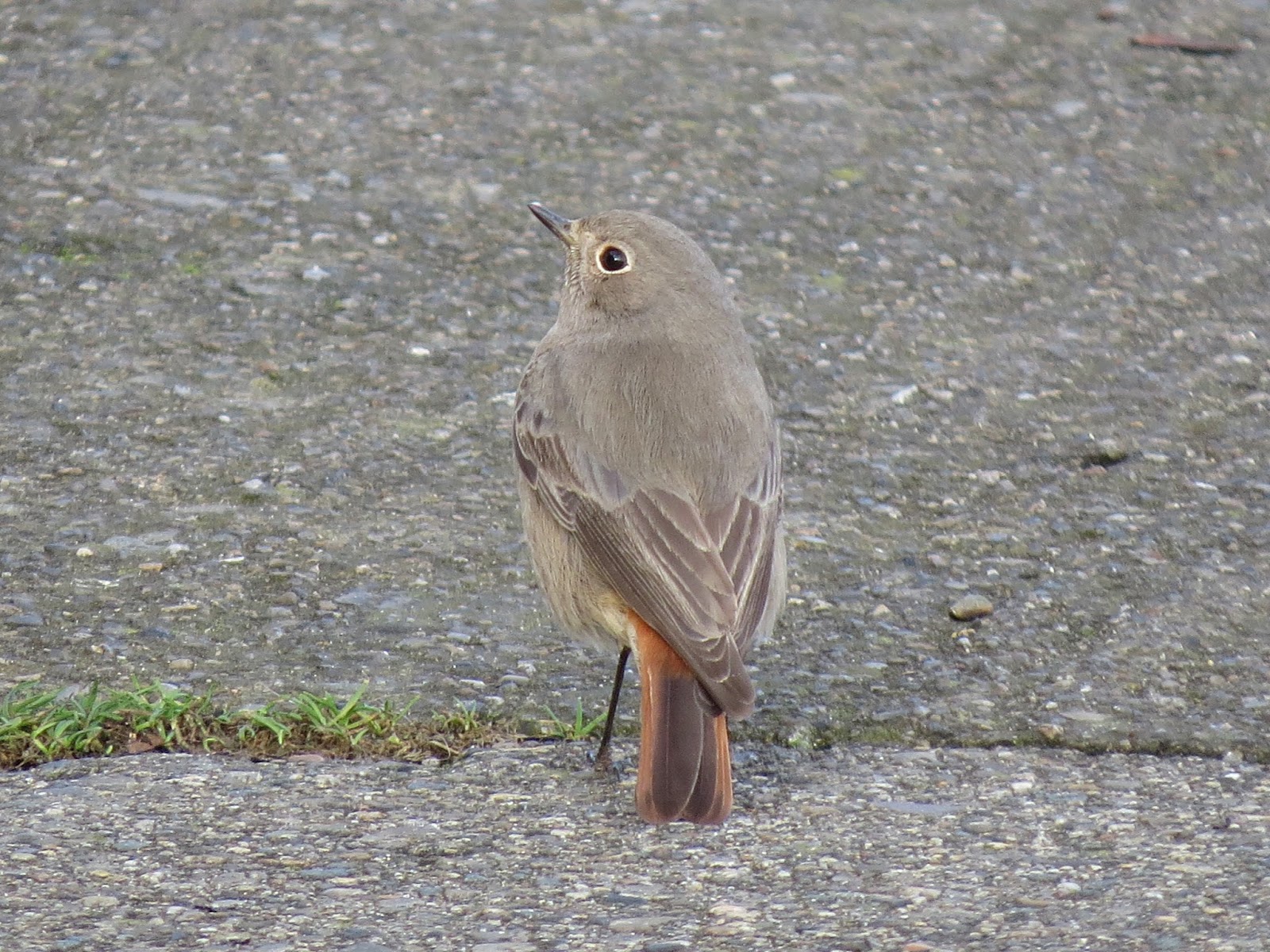
Black Redstart

What began as a trip to South county Dublin to catch up on Med Gulls ended up being about a completley different bird altogether.  Meditteranean Gulls can be fairly reliably found along the coast anywhere from Dun Laoghaire down to Killiney and just beyond.

I parked up at Dun Laoghaire and headed down the steps off the East pier to the old baths where a large flock of mixed gulls were sunning themselves on the rocks and rafting just yards offshore.  There were lots of Pipits, Wagtails and other smalls in and around the shrubs and bushes behind me, however it was the flighty behaviour of one of the smalls that caught my attention.

The flighty bird turned out to be a Black Redstart, and soon it became apparent that there were in fact two individuals present.  Now you don't get to see Black Redstarts in Ireland too often.  We get regular enough visitors most Winters but in very small numbers and always to rocky coastal sites.  There are many years when I never manage to catch up on these fantastic birds so to get two at the one site is about as good as it should get.

An hour later and just a mile down the road at Bullock Harbour I was setting up the tripod when another Black Redstart made an appearance on the pier.  Three in a day, now that's never happened me before and if previous years are anything to go by unlikely to happen to me again anytime soon.

Black Redstart - Dun Laoghaire

Winter colours on show.


Sunday, September 25, 2016

Soldiers Point, Dundlak

The day started  bright and breezy with clear blue skies as I headed towards Soldiers Point in Dundalk.  It's only a few miles further north of Seabank and Anagassan but a good spot that enables you to get great views of the mudflats when the tide is coming and going.

I arrived in the bright sunshine but that didn't last very long.  The sky darkened and a torrential downpour fell for a good 20 minutes.  This sunshine to downpour pattern persisted for the 3 hours I roughly spent on site.

A pretty mixed bag in and around the estuary, I would have liked to get the Forsters tern that's been spotted regularly enough at the Point for the last few weeks but it wasn't to be. The wait goes on for my first east coast Forsters.

Soldiers Point

Black tailed godwits

Black tailed godwit

more Godwits with a Black headed gull in the background

Hooded crow
Dunlin

Little Egret

Redshank

Saturday, September 24, 2016

Wintering Brent

In another few weeks the numbers of Brent Geese returning here for the Winter will explode.  There are daily sightings at all the usual coastal sites but the numbers are still very small.

I was out on the Bull this morning and weather conditions were fairly poor, there were practically no smalls on show and fewer ducks and gulls than you'd expect to find if conditions were better.  There were however the first few returning Brent.  Numbers are still very low but I did manage to get some shots of a couple that came close to the causeway at high tide.


Tuesday, June 21, 2016

North Korea - sanctuary for waders


I read this interesting article on the BBC website today.  It appears that North Korea's lack of modern agricultural techniques has created a very important (if not intended) sanctuary for shorebirds and waders in East Asia.

http://www.bbc.com/news/magazine-36533469

Friday, August 14, 2015

Ring-necked Duck

A rare visitor from North America, the Ring-necked Duck can be found on freshwater lakes and ponds often associating with the very similar looking Tufted Duck.  You can check out my previous post on Tufted Ducks for comparison, it was published in March 2014.

This particular bird was found on the UCD campus and hung around for quite some time (not sure if it's still present).  This bird is a male,  typical of most duck species the female would be an altogether browner looking quite dull bird and not so photogenic


Wednesday, August 12, 2015

Herring Gull

The Herring Gull is a common resident breeding bird in Ireland.  It can be found almost anywhere there is food to be scavenged, be that in ports like Howth where the following shots were taken yesterday, or further inland living off the waste that humans provide in landfill sites and on the general litter and waste that is to be found just about anywhere humans inhabit.

The Herring Gull is a particularly striking bird, the first thing you notice is the sheer size of the bird, they grow to be very large adults, sitting somewhere between the GBB Gull and the LBB Gull in size.  Luckily there are an abundance of them in and around the Dublin coast so I was able to get some different age groups for comparison.

adult Herring Gull


1st Winter Herring Gull

adult Herring Gull

Wednesday, July 8, 2015

Osprey

This Osprey was spotted on Pollaphuca reservoir a couple of weeks ago and hung around for over a week, a long stay in one location by Irish standards.  The usual handful of sightings each year usually tend to be birds that don't hang around for more than a couple of days.

I've chased Ospreys over the years and they usually aren't as obliging as this one was, in fact I've definitely missed more than I've seen.  I visited this bird over two days, the second day was in fact the last day it was reported at the reservoir.


Breakfast is served


Wednesday, April 22, 2015

Bird Atlas 2007 - 2011

Well in the end after almost 10 years from planning to publication the Bird Atlas 2007 - 2011 is in print.  I got my copy in December 2013 and the first thing I noticed was that this is a book of proportions befitting the effort that went into producing it. It's large, it's heavy and comes in at over 700 pages.  I suppose it was never going to be any different really,  it contains the results from over 19 million individual records provided by thousands of volunteers over a four year period for both breeding and winter seasons.


The Barn Owl entry - my very own records are on there
I spent hundreds of hours over those four years rambling up and over the lanes and fields of Co Meath, listening, looking, recording.  At times it was hard, I missed out on so much that was happening around the country because of Atlas commitments.  So many great birds I just never made it to, but there's no regrets, none at all, not when you have in your possession a scientific work as substantial as this to which you contributed even a small part and you see your own name in print and attached to it.

A page from my Winter 2008 records for South  Ashbourne
This Atlas will help shape and direct Bird Conservation throughout Ireland and Britain for the next 10 years and beyond that's how important it is.  I've spent a whole lot of time over the last year and some months reading, researching and just being consumed by the facts, figures and encyclopedic knowledge contained within its pages.

Tuesday, April 21, 2015

Another White-tailed Sea Eagle poisoned

I've written about atrocities such as these previously on this blog.  This is only the most recent in an ever increasing number of mindless, incomprehensible acts of barbarity carried out against Ireland's birds of prey in recent years.

http://www.irishtimes.com/news/ireland/irish-news/eagle-that-was-about-to-lay-eggs-poisoned-in-connemara-1.2179652

Until there is proper, robust legislation to protect our wildlife the perpetrators of these crimes will continue to carry them out safe in the knowledge that in the remote chance that they'll actually get caught the punishment isn't any sort of a deterrent.


Wednesday, April 15, 2015

Wren

They may be one of the smallest birds we have, but that dosen't stop them making a lot of noise.  This little beauty was in full April voice in front of my house on Saturday morning, what a little belter!


Tuesday, April 14, 2015

Twite

Twite are an uncommon resident species, best seen in Winter in coastal fields and along the shoreline.  Gyles Quay in Co Louth has in recent years been as good a place as any to catch these small finches, they've appeared there over the last few Winters in small flocks on and off.

A flock of upwards forty birds was back at Gyles Quay in recent weeks and below are a few shots I took on a recent trip along the Louth coast.


Wednesday, October 22, 2014

Spoonbill

I took a trip up the Meath - Louth coast this morning stopping off at the usual spots.  At Seabank which lies between the better known locations of Lurgangreen and Annagassan a Shorteared-Owl quartered the salt marsh lifting all the smalls at roost.

A scope of the very distant lowering tide line gave up a very rare find for this part of the country, a Spoonbill.  Most records for Spoonbill in Ireland are from the South and South-West coastline and even these are few and far between.  In fact a quick reference of the Bird Atlas 2007-11 when I arrived home showed up no records for Spoonbill on the East coast of Ireland at all during that particular four year period.  Furthermore Spoonbill were only recorded in eleven 10km squares during the Atlas and all were on the a fore mentioned South to South-West coastal region.


All of that makes this 1st Winter Spoonbill more than just a good bird for the region, it makes it a great bird for the North-East.  Apologies for the quality of the shots but this bird really was a long way out on the mudflats.

Friday, March 21, 2014

Redshank

The Redshank is a very common resident in Ireland.  It can be found along the shoreline and on estuaries throughout the country, its numbers swell in Autumn/Winter with the influx of birds from colder regions. They do breed in Ireland but only in small numbers as most of our visiting birds depart at the start of spring for whence they came.

These shots were taken this morning at Sutton Creek in Dublin.  There were plenty of Redshank around, foraging amongst the seaweed, racing up and down the shore just on the tide line.